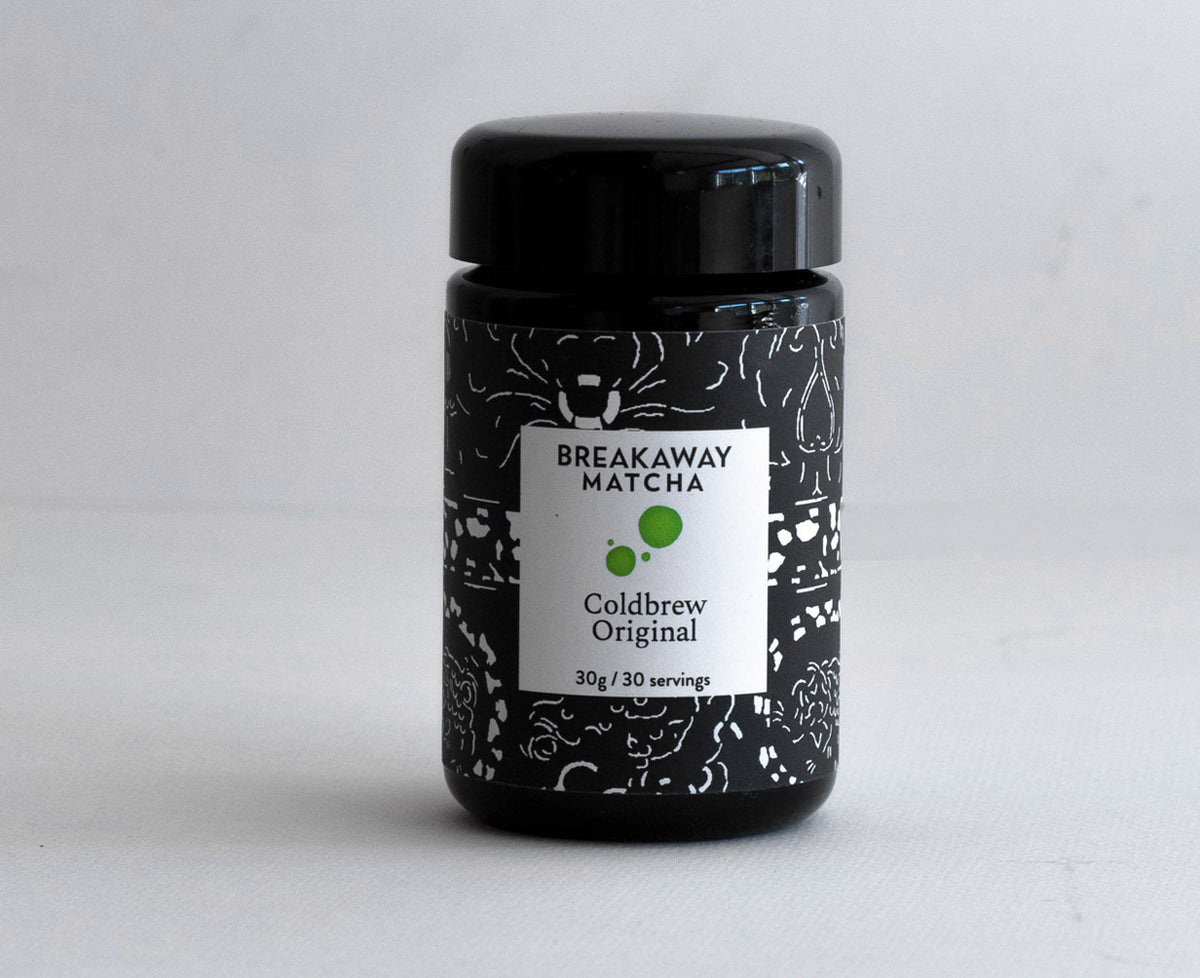
30 servings
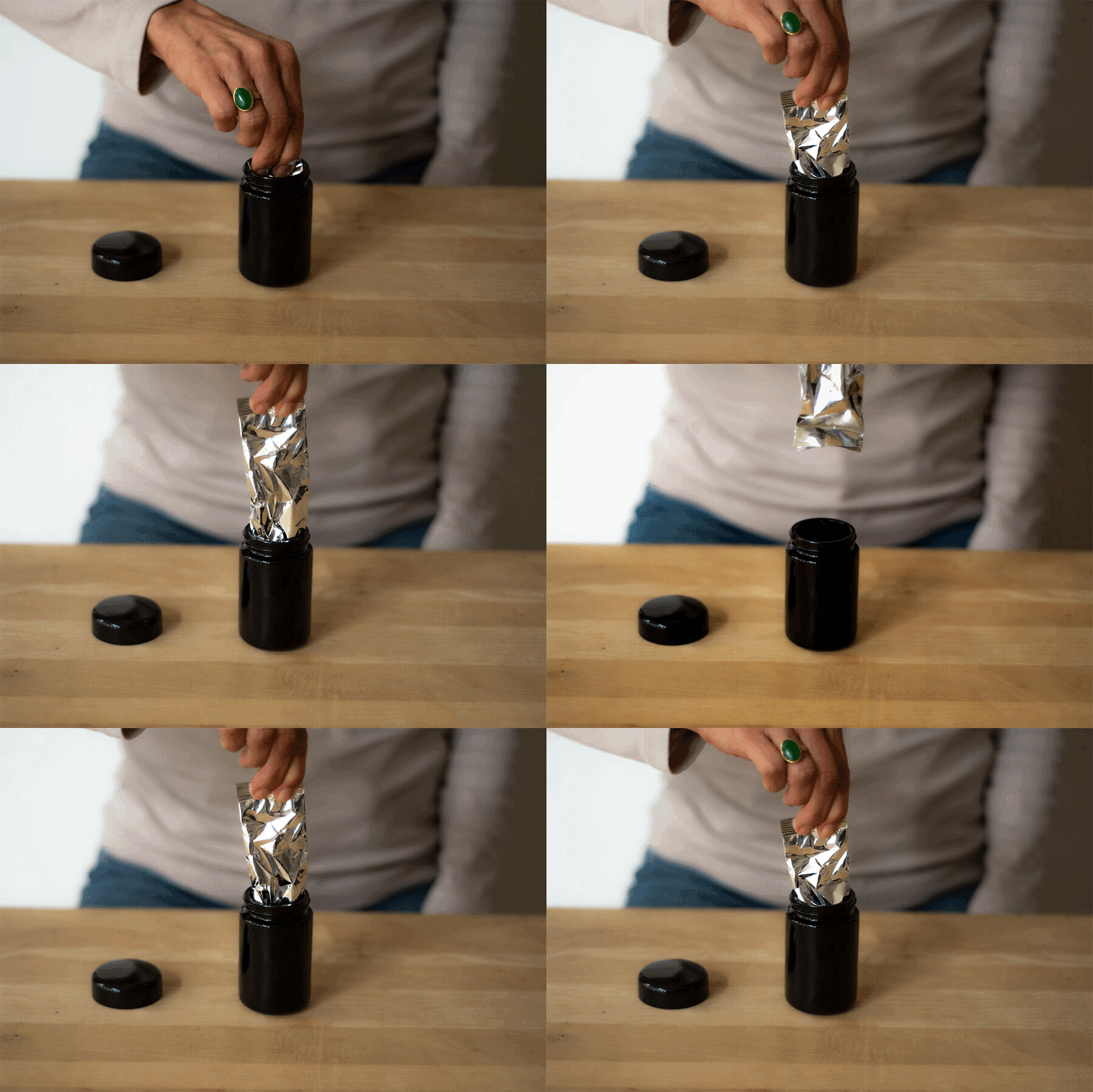
Your matcha arrives sealed in a nitrogen-flushed mylar bag. Snip it open and transfer the powder into your black glass jar.

Green tea leaves, ground into a fine powder.
Creamy, umami-rich matcha from Uji. Made for ice-cold water.
Have loved this matcha for almost 10 years! No chemicals, dyes, extra ingredients, or sugars with a glass container to eliminate plastic derived from family farms in Japan.. couldn’t ask for a better product!
This matcha is SO GOOD. I've tried many different brands and this blend is up there with the best I've had. It's super smooth, not bitter at all, and goes extremely well with oat milk or straight water. Delightful! Can't wait to try it mixed into a cocktail.
Favorite matcha
I have this cold brew on subscription because it’s my daily afternoon go-to. It’s creamy, refreshing, and the perfect drink to get me through my midday slump with calm and focus. I look forward to it every day!
Wow! Just 2 cups cold water that I put in the freezer until a thin layer on top, two teaspoons of this matcha, 2 tablespoons of fresh squeezed lemon juice, and 2 tablespoons of honey gives me a delicious, healthy, Paleo, Arnold Palmer. I used an immersin blender for 40 seconds to mix. Perfection!
Great quality
Great flavor.
My first time trying Cold Brew matcha and this will be my go-to summer refresher!! The quality of the product and customer service is top tier!!!
wonderful, refreshingand easy to use
Coldbrew Original Matcha is now my daily afternoon indulgence at work! It is so great, just as satisfying as a regular iced (espresso) latte. But it's not just that I like Coldbrew Original Matcha as much as espresso, it's also the value. When I'm at work and my alternative is buying an iced latte for $5, I can instead make myself a matcha coldbrew for a fraction of the cost and it's just as good...or better. Thank you, Breakaway!!
Disappointing compared with the past version. Doesn't blend well and not potent enough to mask a sweetener like monk fruit extract which a cheaper matcha I imported from Japan could. Flavor is weak. Fast shipping undeniably though. I'm trying to vet a matcha to stick with and its between here and the direct from Japan company (import duties).
I’ve been buying various matches from Breakaway for years now, but this is the first time I’ve tried the cold brew - it’s phenomenal! Perfect for the late spring and summer months when I want an iced beverage anyway, and love that it’s a little more affordable than some of the 90s series I enjoy at other times of year as well. Grateful to have this option, it’s bright and smooth and delicious 🥰
Arrived on time and as expected. Great customer service. Good taste and color
It’s not strong at all. Bit bitter as well for the price.
Love it !
I have never been disappointed with matcha purchased from Breakway. The quality of the products and quality of the service are terrific. Whether it's coldbrew, culinary grade, or premium grade, Eric aims to please.
This is on subscription for me. I go through 100g of matcha a month so this is good value for great quality. It is a pleasant to make my daily matcha latte, frothy and smooth.
I partake of quite a bit of matcha and I just say - hands down that Breakaway Matcha has truly surpassed my expectations. It is honestly my favorite.
Beautiful tasting matcha that is so much smoother than what I’ve had before. I’m no expert, but I feel good trusting Breakaway because they clearly care about their product.
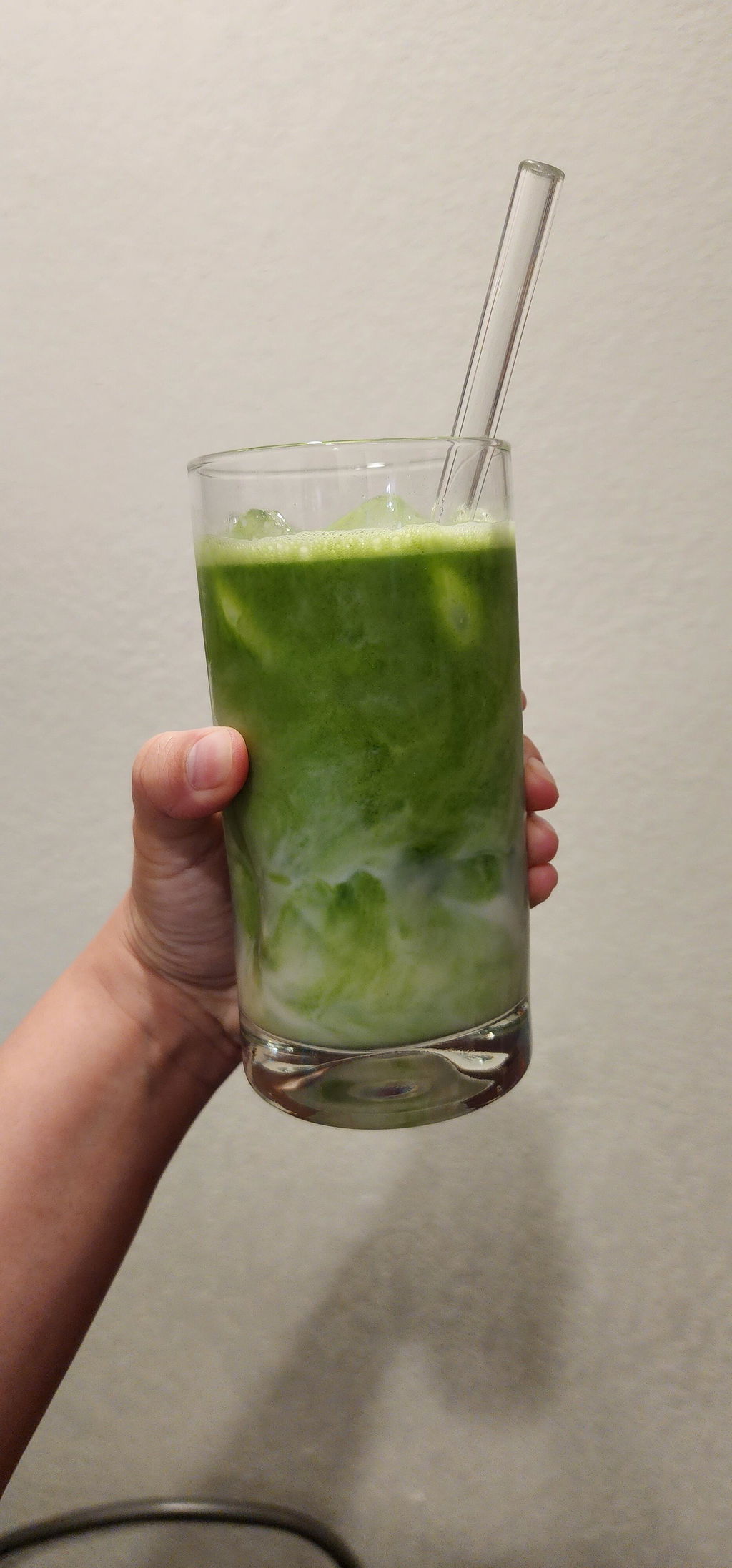
Love this matcha so much...grassy, clean, creamy and delicious over ice with a little almond milk. And love this company...Eric is super thoughtful, kind and helpful!
My go to matcha
This is my tried & true matcha. Everything is good & perfect with customer service, product delivery, and most of all, the quality of the matcha. I've been a Breakaway customer for years. I've never been disappointed or unhappy with the matcha, and if I was, I know the owner would make it right.
This is my go to summer pick me up. Fresh, invigorating, and inspiring - I absolutely love this cold brew matcha. Cheering on the efforts to support Japan’s matcha farmers so we can all continue to enjoy this green magic.
Coldbrew Original Matcha was my entry point with Breakaway and is a staple in my tea cabinet. It has a smooth, clean flavor that is very enjoyable.
Matcha is like my coffee addiction. I have it every morning and I love the cold brew version as it’s so fast and easy. I shake it up and give it a whisk and it’s perfect. Great quality.
Our favorite and the only matcha we drink anymore! Perfect flavor for iced matcha.
There truly is no going back to any other matcha once you’ve had Breakaway matcha. My family and I love the cold brew during the summer months—it is so smooth, almost creamy and without the need for any cream (though a touch doesn’t hurt). For us, Erik’s matcha is the ONLY matcha and we are lifers at this point. 😊 🍵
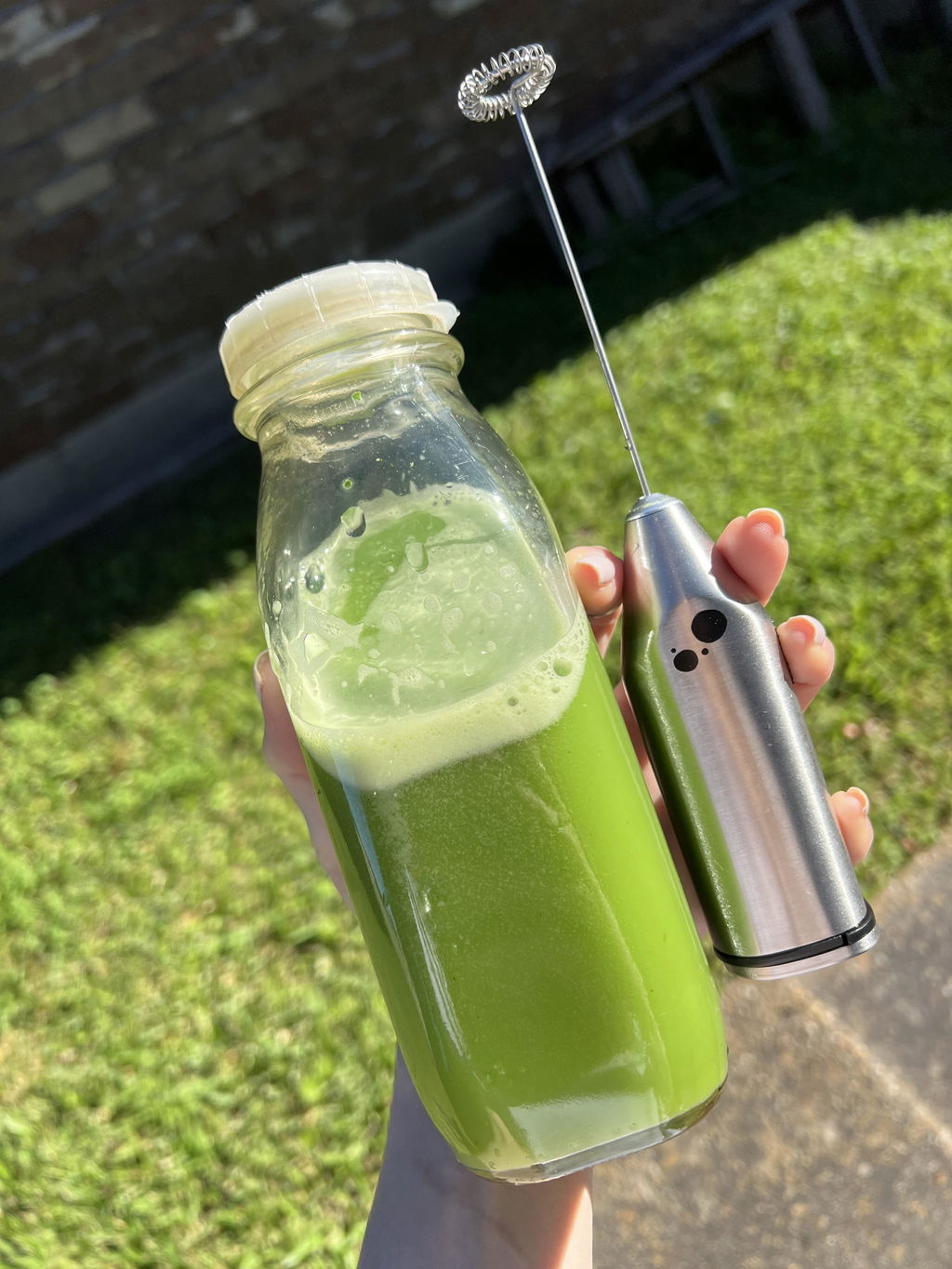
Shakes well into a really smooth and foamy cold brew with no clumps! Great flavor and high quality.
Tatsy and beautiful
That's why I have it in subscription. 😉
Incredibly fast shipping, and amazing high quality matcha! The coldbrew blend is super easy to make, and I’ve found that I can make it cold or hot and still get a great result. Really smooth and mild matcha that isn’t overly bitter or umami — perfect for beginners or those who are new to matcha. Also love the heavy tinted glass packaging because it helps preserve my matcha.
Worth every penny. My summer goto cool treat. Puts an immediate smile on my face just smelling it. When my lips glass is emptied, I feel fortified to face the world again.
Matcha powder. Ice-cold water.
A moment to make your own.

See how a cold brew comes together.
Keep your matcha refrigerated in its protective pouch or black glass jar.
Your matcha arrives sealed in a nitrogen-flushed mylar bag. Snip it open and transfer the powder into your black glass jar.
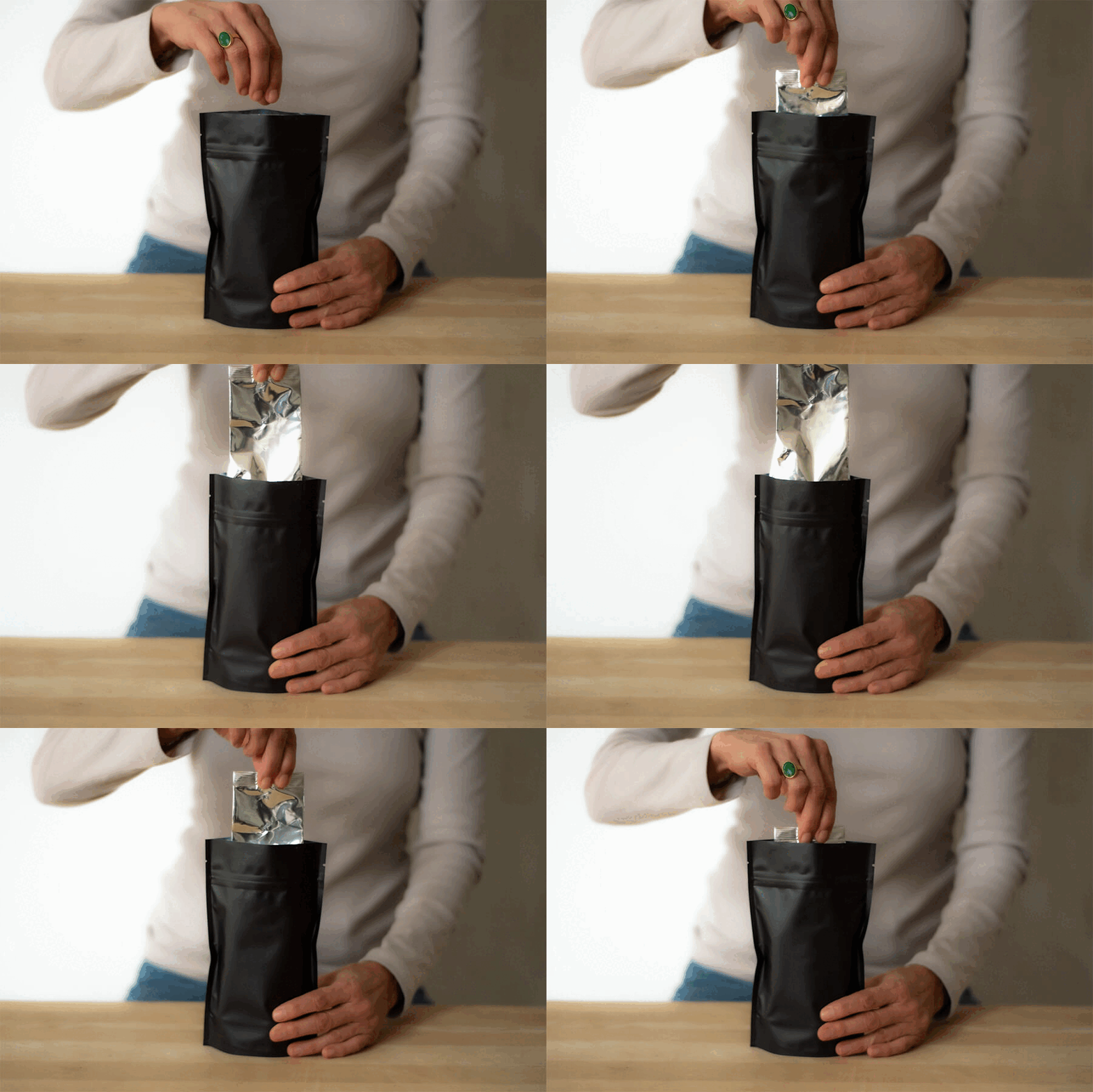
These sizes also arrive in nitrogen-flushed mylar. Transfer the powder into its protective black pouch or a suitable black glass jar.
Umami galore makes this remarkable tea taste sweet. Has a creaminess that almost tastes milky, and, when properly prepared, creates a crema not unlike a Guinness draft. Has a long, beautiful finish.
Produces a clean energy that leaves you feeling sated, your stomach feeling jubilant, and your brain feeling optimized. An incredible value for a really tasty matcha. From Uji, the Mecca of great matcha.
Free shipping on US orders. Read the shipping details.
Mainly because the farmers and processors care so much; their processes take longer, require more steps, and are just harder. They’re pretty obsessed with producing Japan’s tastiest and healthiest matcha, and we don’t mind paying them well for the extraordinary product they produce. Rarity comes into it as well -- some blends, especially the named blends (Kamakura, Rikyu, Jizo, Hikari, Satoshi, and Daphne) have extremely limited production. These teas are hard to produce.
No. No sugar, additives, or any other nonsense. It’s 100% extraordinary green tea leaves, ground up into a fine powder.
Location on the tea plant, mainly. Hyperpremium is the baby leaves; we only use the newest growth. Imagine baby vegetables, baby herbs, microgreens. They haven’t had much time to develop much molecular complexity, so there are no bitter or astringent notes, just clean, chlorophyll-packed umami.
Leaves used for coldbrew are slightly older, and have a little more biocomplexity to them. That complexity does add some bitterness and astringency, but it’s undetectable when prepared with ice water, so it tastes rich and creamy. Yields are tiny for the hyperpremium, and yields are bigger with coldbrew (the leaves themselves weigh more, and are larger, hence bigger yields).
This term has lost most of its meaning. Because there is no governing body of any type that monitors/controls what can be labeled ceremonial, anyone can -- and does -- use this moniker to connote quality, even though much of the “ceremonial” matcha on the marketplace is in fact barely culinary -- much of it could be better described as “industrial.”
Moreover, many tea ceremonies in Japan notoriously serve sub-par matcha. In the end, many of the ceremonies aren’t really about tea at all, they’re about choreography and pedigree. Sometimes the teas are tasty, but more often they’re oxidized and bitter and astringent; hallmarks of culinary (or worse) matcha.
Some people insist on organic (generally for good reasons), so we searched hard for years and finally found what we feel is the tastiest and best organic matcha in the domestic Japanese market. However, our conventionally grown matcha is utterly safe, and it tends to taste better because its umami/amino acid structure is more pronounced.
We stand behind our teas and teaware, and want you to be not just satisfied with them, but thrilled. If for any reason you’re not, just let us know and we’ll do our best to make it right.
More from the Breakaway collection.
Tea-fueled inspiration to help you create pauses and meaning.


